
Free shipping on orders over $75!
Free shipping on orders over $75!
Free shipping on orders over $75!
Free shipping on orders over $75!
Free shipping on orders over $75!
Free shipping on orders over $75!
Free shipping on orders over $75!
Free shipping on orders over $75!
Free shipping on orders over $75!
Free shipping on orders over $75!

Stainless Steel vs. Glass: Which is Better for Microwaves?
Written by: Smash Products | Date: 8/14/25
From beach days to school yards and sweaty job sites, microwaving lunch is a daily ritual in most Aussie homes. But the container you reheat in matters more than most people think. The short answer: both glass and microwave-safe stainless steel are safe to microwave when used correctly — glass wins on visibility for home reheating, while ceramic-lined stainless steel wins on weight, durability and life on the go.
With families growing more wary of microplastics leaching from worn plastic tubs, the real contest today is glass vs. stainless steel. Here's how each performs where it counts.
At a glance: glass vs. stainless steel
- Safety — Both are non-toxic and non-reactive. Neither leaches chemicals into food like worn plastic can.
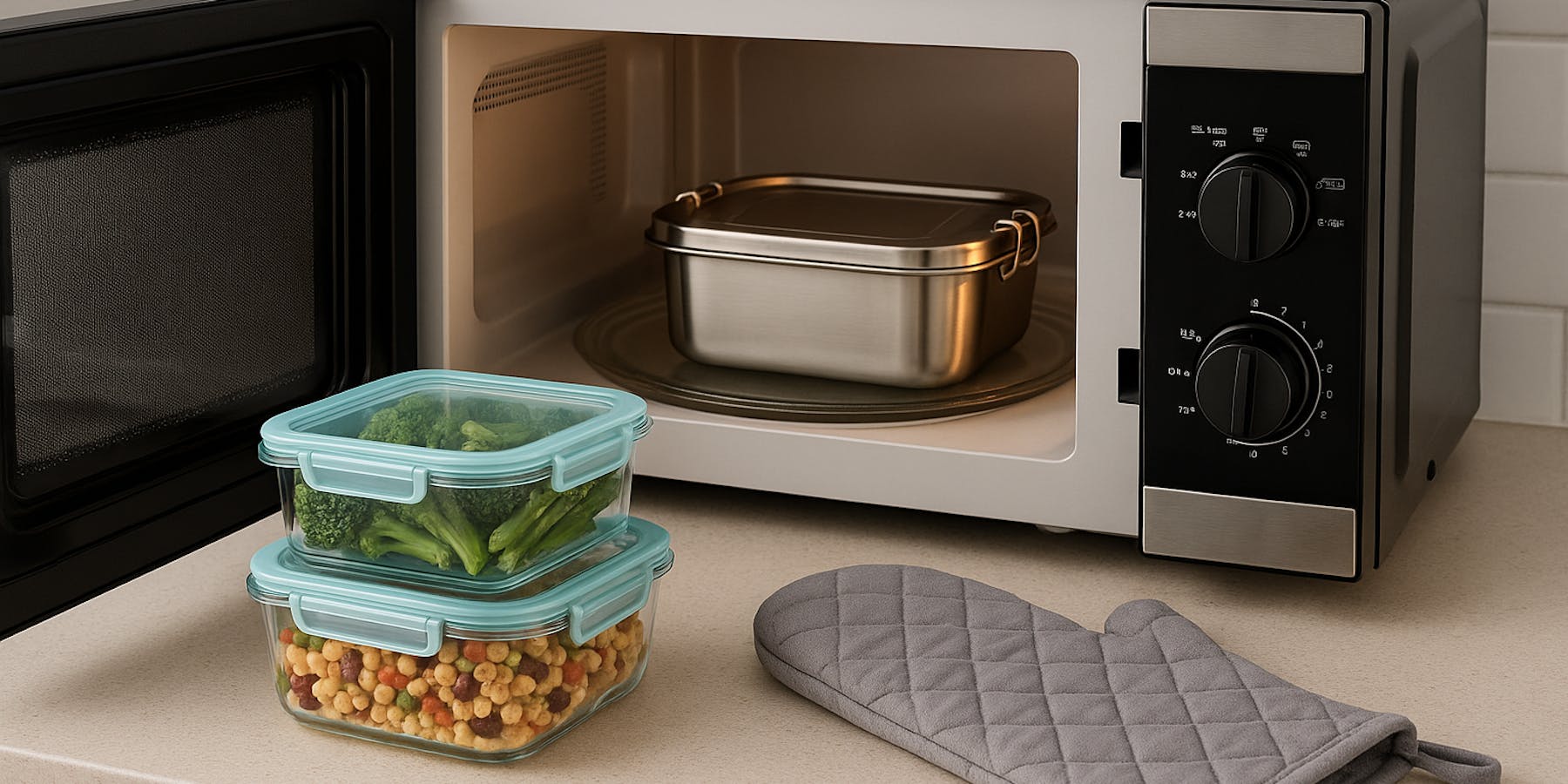
- Microwave — Glass is microwave-safe by default. Only purpose-built, ceramic-lined stainless steel (like Smash) is microwave-safe.
- Weight — Stainless steel is far lighter and won't shatter, so it's better for bags, commutes and little hands.
- Taste — Both keep food tasting clean. Ceramic-lined stainless avoids any metallic aftertaste.
- Best for — Glass for home reheating and leftovers; stainless steel for work, school and travel.

Is glass safe in the microwave?
Yes. Glass has been the household go-to for decades because it's microwave-safe, non-reactive and completely see-through, so you always know what's inside.
Pros:
- Microwave-safe and non-reactive
- Doesn't stain, hold odours or affect taste
- Easy to see what's inside
Cons:
- Gets very hot when microwaved
- Heavier, and prone to breaking if dropped
Glass is ideal for home use — reheating dinner or storing leftovers in the fridge — where weight and drops matter less.
Can you microwave stainless steel?
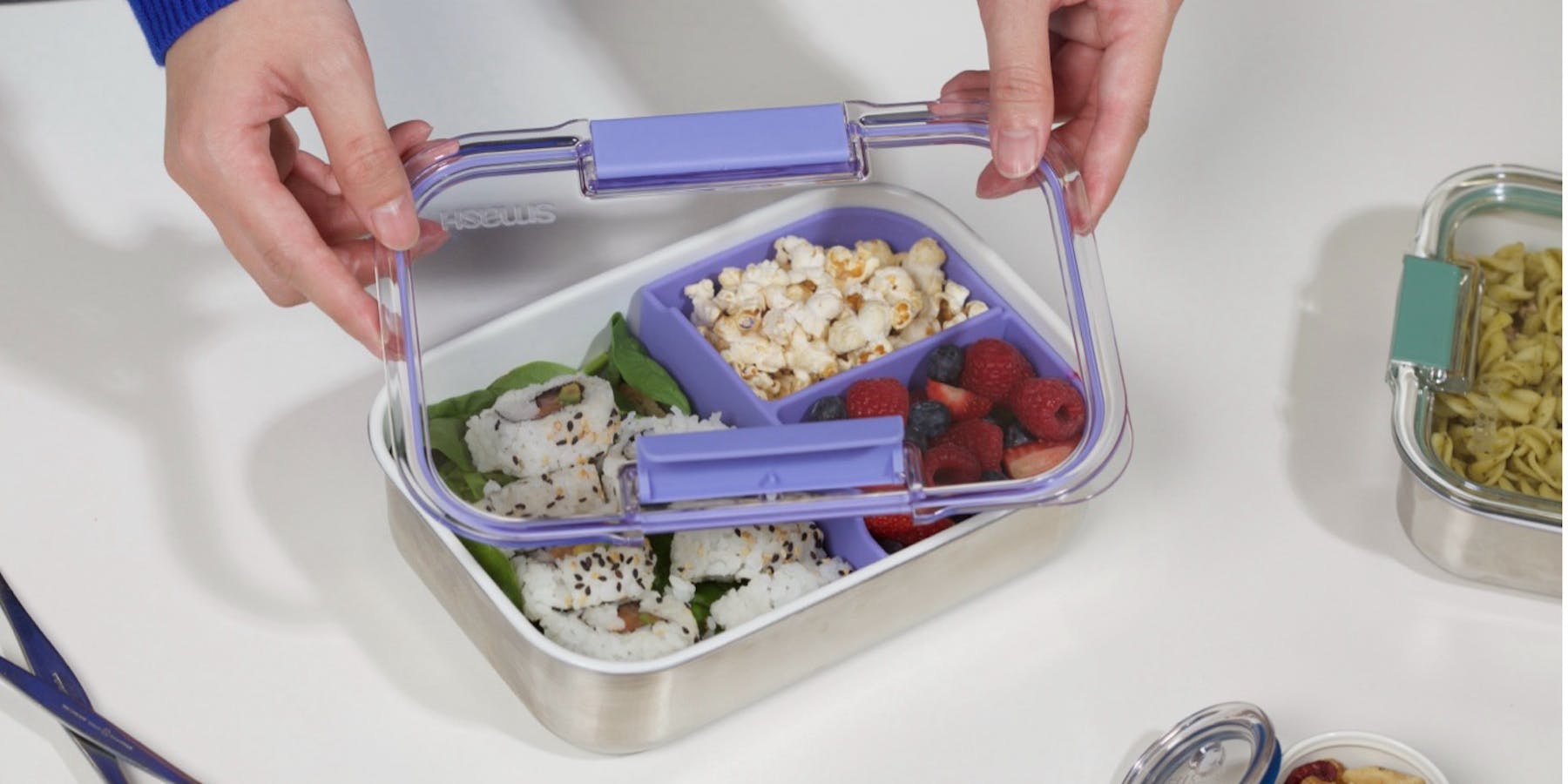
Most stainless steel can't go in the microwave — but purpose-built containers can. Smash's plastic free range is lined with ceramic and engineered specifically to be microwave-safe, so you get the toughness of steel without the usual rule against metal in the microwave.
Pros:
- Lightweight and shatterproof
- Doesn't retain smells or stain
- Ceramic lining keeps a neutral, clean taste
- Built to last years, not months
Cons:
- Higher upfront cost than plastic
- Still unfamiliar to some shoppers (yes, this type really is microwave-safe)
For life on the go — work lunches, school bags, road trips — ceramic-lined stainless has a clear edge. It's tough, light and made for real life. For a deeper look, see our guide to the top reasons to switch to microwave-safe stainless steel.
So, which should you choose?
Both are safe in the microwave when used correctly. It comes down to how and where you eat:
- Choose glass if you're mostly reheating at home and like keeping an eye on your food.
- Choose stainless steel if you need something light, shatterproof and built to survive a bag or a commute.
Want the best of both? Smash's ceramic-lined stainless steel food storage pairs a shatterproof steel base with a neutral ceramic interior — microwave-safe, freezer-friendly and genuinely plastic free. Whichever way you lean, you're taking a smarter, safer step for your food and your family.


Frequently asked questions
Is it safe to put stainless steel in the microwave?
Standard stainless steel should not go in the microwave, but purpose-built containers can. Smash's plastic free range is ceramic-lined and engineered to be microwave-safe, so it heats food evenly without the sparking risk of ordinary metal. Always check that your container is labelled microwave-safe before use.
Which keeps food fresher, glass or stainless steel?
Both keep food fresh because neither stains, holds odours nor reacts with food. Glass lets you see contents at a glance, while ceramic-lined stainless steel resists smells and won't crack. For meal prep stored in the fridge or freezer, stainless steel lasts longer without warping.
Does stainless steel make food taste metallic?
Not when it's ceramic-lined. The ceramic interior on Smash containers sits between your food and the steel, so meals taste clean with no metallic aftertaste — unlike bare stainless, which some people can taste.
Is glass or stainless steel better for kids' lunches?
Stainless steel is usually better for kids because it's lightweight and won't shatter in a school bag. Glass is heavier and can break. Smash's Kids Bento uses a ceramic-lined stainless base with BPA-free lids for a safe, durable lunch.